Los Angeles weather is polite until it is not. Blue skies, strong sun, occasional high winds, and the rare but intense rainy season present a set of demands that roofs on multi-unit buildings must meet without drama. For property owners, managers, and developers who juggle budgets, code compliance, tenant satisfaction, and long-term value, metal roofing has quietly become one of the smartest investments. Eclipse Metal Roofing brings a practical, experienced approach to metal roofing contractor work in Los Angeles, delivering systems that last, reduce maintenance headaches, and often improve the building’s bottom line.
Why many apartment buildings and small multifamily properties in LA are switching to metal roofs comes down to a few concrete advantages: longevity measured in decades, a better roof for fire resistance in a city that prizes defensible space, and energy performance that can lower utility costs for tenants and owners alike. Those benefits are real, and they matter differently depending on the building type, roof geometry, and budget. I’ve overseen dozens of projects in Los Angeles where the decision to specify metal was less about trend and more about matching the material to long-term risk tolerance.
What metal roofing delivers for multi-unit buildings
A single-unit house and a three-story walk-up manage risk differently. Multi-unit properties have shared financial exposure: a roof failure can mean multiple displaced tenants, insurance claims, and lost rental income. Metal roofing mitigates that exposure in several ways.
First, durability. Quality metal roofs, installed with attention to flashing details and underlayment, typically last 40 to 60 years depending on material and finish. That covers several cycles of tenant turnover and reduces the frequency of re-roofing as a capital expense. For owners who model cash flow 10 to 20 years out, replacing a failing asphalt roof once in the next decade versus a metal roof that holds for a half century is a material difference.
Second, fire resistance. Many metal roofing panels are non-combustible, which is important given local fire hazard considerations. In LA’s microclimates, parts of the city are rated for higher fire risk. Using metal roofing can improve a building’s defensibility and sometimes reduce insurance premiums where carriers take construction materials into account.
Third, energy performance. A reflective metal roof with proper insulation and ventilation can lower cooling loads, helping tenants stay comfortable and reducing air conditioning use. In Los Angeles, where cooling can represent a large portion of energy bills during summer months, that performance is not theoretical. I’ve seen projects with reflective coatings reduce rooftop temperatures by 30 to 40 percent compared with older dark composition roofs, translating into noticeable, measurable savings on common-area HVAC and complaint reduction from tenants.
Practical considerations: not every metal roof is the same
Metal roofing is not one product. It’s a category that includes standing seam panels, corrugated sheets, shingles, and composite metal tiles. Material choices include aluminum, steel, and, less commonly in LA, copper or zinc. The differences matter for cost, weight, longevity, and appearance.
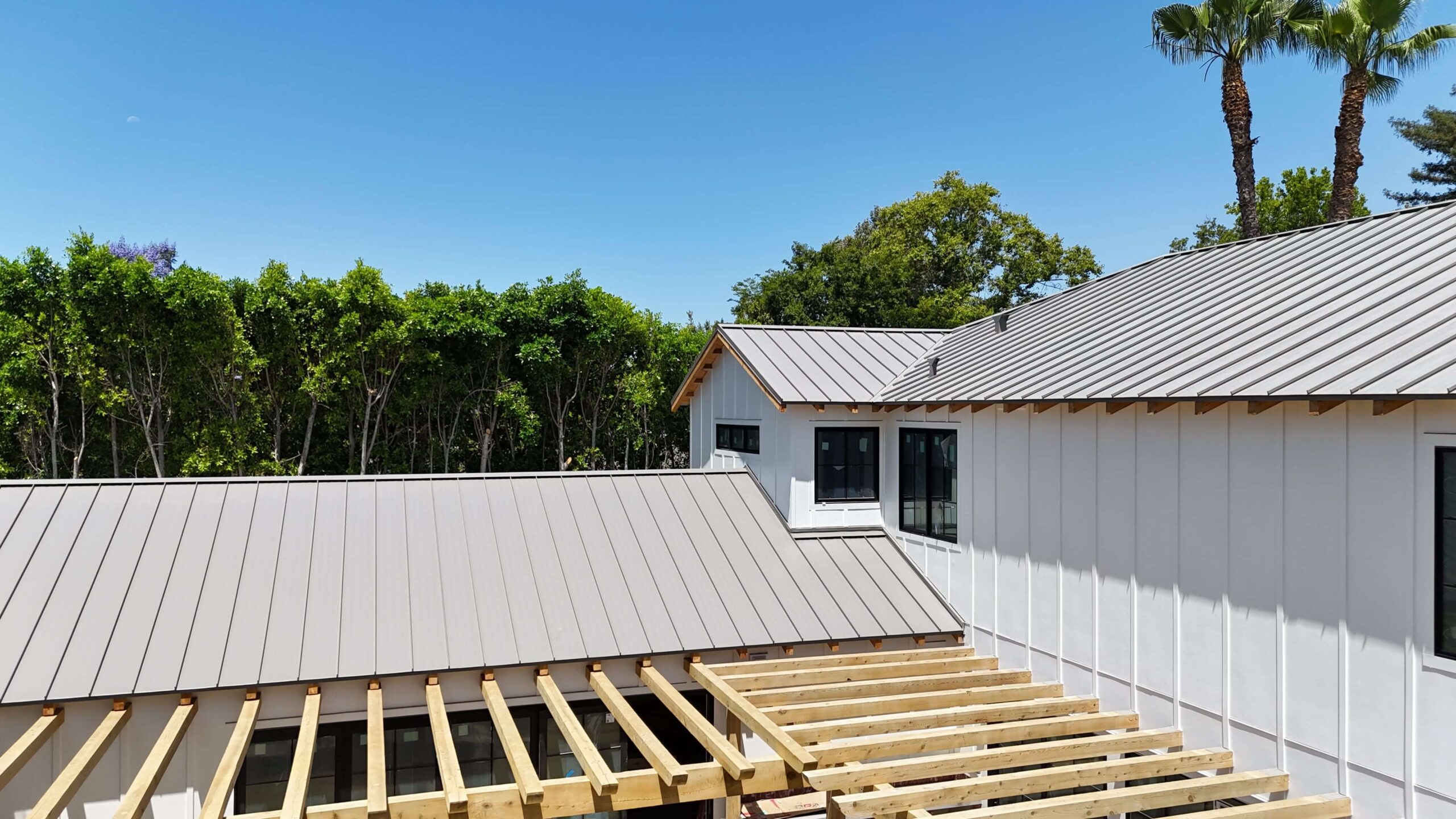
Standing seam is the most common pick for multi-unit buildings because it provides clean lines and hides fasteners, which reduces leak points. Helical or mechanically-seamed systems offer better performance in heavy wind and rain. Corrugated panels are economical and fast to install, but they expose fasteners to the weather unless special clips or washers are used. Aluminum resists corrosion better near the coast, so it becomes the pragmatic choice for buildings within roughly a mile of the ocean. For inland urban neighborhoods, coated steel with a high-quality paint finish balances cost and longevity.
The substrate matters too. A roof deck in poor condition cannot accept a long-lasting metal roof without repair. I recall a retrofit project in Koreatown where an owner wanted to swap in a metal roof to avoid future maintenance. Once we removed the old membrane, we found plywood decking with sections softened by previous leaks. We repaired and reinforced the deck, added a breathable underlayment, and installed a ventilated standing seam metal roof. The project cost rose 12 percent from initial estimates, but the result avoided chronic leak patches and reduced long-term maintenance by a wide margin. That extra upfront investment paid for itself through avoided emergency repairs and higher tenant retention.
Permitting and code in Los Angeles
LA’s building codes and permitting process require attention to detail, and they vary by zone and use. Multi-unit buildings often fall under different requirements than single-family homes, especially if they are three stories or taller, or located within historic districts. Code issues commonly affect structural loading, eave and gutter design, and fire classification of roofing materials.
Working with a metal roofing contractor in Los Angeles who understands these nuances smooths the path through plan check and inspection. Eclipse Metal Roofing has experience preparing permit-ready drawings, specifying fire ratings, and offering details that inspectors expect. For example, when attaching a metal roof to an existing deck, a structural engineer’s stamp may be required if additional framing or shear transfer is involved. A contractor who anticipates this can budget time and cost for structural review up front, avoiding last-minute delays.
Cost, return on investment, and financing options
The initial installed cost of metal roofing for a multi-unit building typically runs higher than asphalt composition per square foot, sometimes 1.5 to 2.5 times more depending on material and complexity. That price gap narrows when you factor in the expected lifespan and reduced maintenance. For owners who use net present value to roofing services in Los Angeles CA compare alternatives, stretching the horizon to 20 years or more often favors metal.
There are other financial levers too. Some municipal programs and utility companies offer rebates or incentives for cool roofs or energy-efficient upgrades, and reflective metal roofs often qualify. Also, re-roofing can be capitalized in different ways: owners may use reserve funds, take a short-term loan, or pass a portion of costs through to tenants via planned capital improvements, depending on lease structure and local landlord-tenant laws.
A guideline that has worked in practice: when a roofing solution reduces expected maintenance costs by at least 25 percent over the next decade, metal roofing becomes attractive for owners who plan to hold the property long-term. If the owner intends to sell in five years, the calculation shifts toward lower upfront cost unless a premium can be demonstrated for a metal roof in the neighborhood market.
Installation realities and schedule
For multi-unit buildings, scheduling matters. Tenants expect predictable access to common areas, and property managers need time for staging and for parking negotiations with crews. Metal roofing helps here because many systems can be installed faster than fully-torched modified bitumen or complex built-up roofs, but speed depends heavily on the crew’s experience and roof complexity.
A typical three-story walk-up with a reasonably straightforward plan can be stripped and reroofed with standing seam in seven to ten working days if the deck is sound and weather cooperates. For larger footprints with penetrations, skylights, and mechanical equipment, plan on two to four weeks. Working around tenant needs, crews will often stage material offsite and work in sections to keep noise and disruption manageable. Good contractors include a tenant communication plan in the scope, detailing working hours, safe egress pathways, and dust control.
Maintenance: what owners should plan for
Metal roofs reduce maintenance, they do not eliminate it. Periodic inspections are essential, especially after heavy rain or wind events. Look for loose flashings, compromised sealant, and debris buildup. Gutters and scuppers need to be kept clear to avoid water pooling at eaves. Fasteners in exposed-fastener systems should be checked every few years; standing seam systems require less frequent intervention.
A practical maintenance schedule I've used includes an annual visual inspection and a more thorough inspection every five years. Annual checks can be done by building staff or a property manager; the five-year inspection is a paid service that includes torque checks on fasteners, replacement of worn sealants, and touch-up of the paint where granular loss is visible. Tracking these actions avoids small problems becoming expensive repairs later.
Design and curb appeal
Multi-unit buildings often benefit from a roof that improves curb appeal. Metal panels come in a broad palette of finishes and profiles that can match historic districts or contemporary developments. For owners pursuing a higher rent or repositioning a property, the roof is a visible, hard-to-ignore cue to tenants and prospective buyers about the building’s upkeep.
Selecting a color is more than an aesthetic choice. Light colors improve reflectivity and reduce heat gain, while darker tones can complement shaded courtyards and wood trims. For rooftop amenity spaces, consider a finish that reduces glare and integrates with deck finishes. Solar arrays mount well to many metal roofs; standing seam systems can accept clamp-mounted solar without roof penetration, which protects the envelope and makes integration cleaner.
A short practical checklist for owners evaluating metal roofing options
- confirm the contractor is licensed for commercial roofing, has experience with multi-unit properties in Los Angeles, and can provide local references request a written scope that includes deck repairs, underlayment type, flashing details, and a clear warranty for both materials and workmanship compare warranties carefully, noting that some coatings and finishes carry separate terms from the metal panels themselves ask for a project schedule that accounts for tenant notification and staged work, and confirm how the contractor will protect plumbing and HVAC penetrations during the job
Why contractor selection matters more than brand
Panels and coatings are commodities to a point, but the installer determines performance. Flashing details, fastener patterns, water-table transitions, and how junctions around chimneys and mechanicals are handled dictate whether a roof leaks or lasts. I’ve seen top-shelf panels fail prematurely because a contractor used sealant where a metal crimp was required, or because fasteners were over-torqued.
Working with a trusted metal roofing contractor Los Angeles owners rely on makes a difference. Eclipse Metal Roofing positions itself as that partner for multi-unit buildings, combining manufacturer relationships with field experience. They often coordinate with structural engineers, architects, and municipal inspectors to keep projects moving. Ask for examples of similar projects and photographic documentation of past jobs, including close-ups of flashing work and penetration details.
Edge cases and when metal may not be the best choice
Every material has limits. If a roof has extreme curvature, unusual parapet geometry, or features that would require excessive on-site fabrication, the cost advantage of metal may erode. Historic buildings under strict preservation controls may require materials that replicate original roofing profiles; sometimes composite materials or treated shingles win on compliance. Very small properties where a complete re-roof is planned only for the short term before a major redevelopment might not justify the higher upfront cost of metal.
Another consideration is noise. Metal roofs can transmit impact noise from heavy rain more than insulated membrane roofs unless appropriate underlayment and insulation strategies are used. For buildings with sensitive tenants, such as studios or professional spaces, discuss acoustic treatments. Properly detailed insulation and underlayment often eliminate perceptible differences inside units.
Sustainability and lifecycle thinking
Metal roofs are highly recyclable. At the end of their life, panels are typically reclaimed and recycled into new steel or aluminum products. When tracked across a lifecycle analysis that includes lower replacement frequency and the potential energy savings from reflective finishes, metal roofing often performs favorably on sustainability metrics.
For owners pursuing green certifications or trying to improve building performance for marketing, a metal roof can be one of several meaningful upgrades. Pairing a reflective metal roof with attic insulation, duct sealing, and LED lighting upgrades produces a package that tenants notice and that helps with operating cost reduction.
How to move forward: a practical first meeting with a contractor
Start with a site visit. The contractor should walk the roof, identify obvious deck issues, measure drainage patterns, and take photos of penetrations and mechanical equipment. Ask for a written assessment that separates fixed scope items from probable contingency items, like unseen deck damage. Clarify warranty terms, and confirm who will handle permit submittal and coordination with city inspectors.
Be wary of low-ball bids that exclude essential items such as underlayment upgrades, proper ridge and rake flashings, or required structural reinforcement. A thorough quote will include allowance lines where appropriate and a clear timeline for when decisions about finishes and extras are due.
Closing thought
For multi-unit buildings in Los Angeles, a metal roof is not a fashionable upgrade, it is a pragmatic strategy to reduce risk, manage maintenance, and improve asset value. When chosen and installed with intent, metal roofing delivers decades of performance, better fire resistance, and energy benefits. That outcome depends on careful material selection, honest assessment of the roof deck, and a contractor with hands-on experience with multi-unit projects in LA, like Eclipse Metal Roofing. If you manage several units and the current roof is approaching the end of its life, invest the time now to get a proper assessment, because the right roof choice will pay for itself across the next several ownership cycles.
Eclipse Metal Roofing
2140 Westwood Blvd Unit 209, Los Angeles, CA 90025
+1 (310) 490- 9695
[email protected]
Website: https://eclipsemetalroofing.com